Select the best native trees for your backyard restoration
There's a particular sound a shovel makes when it finally bites into a root-bound backyard for the last time - a kind of sodden surrender, turf folding back like a page.
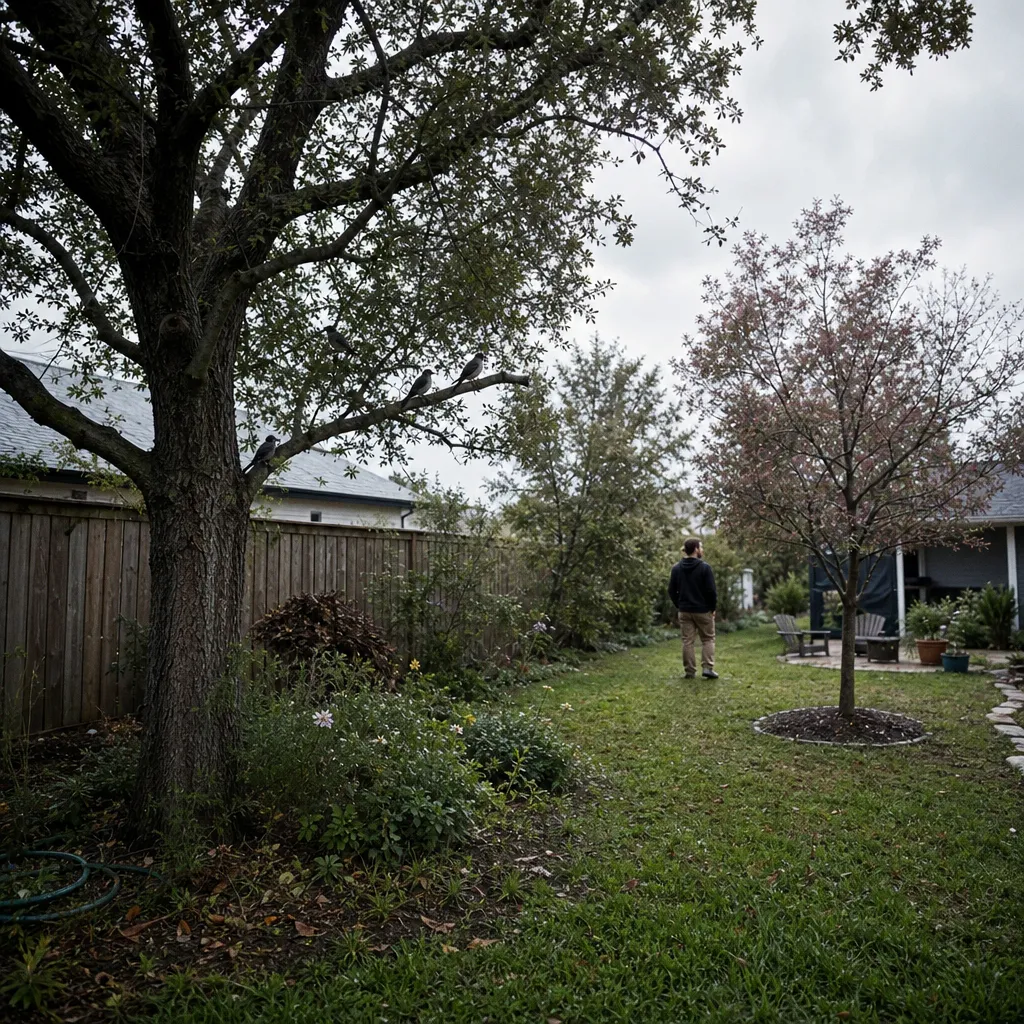
The case for going native (and what "native" actually means on the ground)
"Native" gets thrown around like birdseed. In a working restoration sense, the word is narrower than most people realize. A native tree is one that evolved in your specific ecoregion, ideally within a few hundred miles of your site, and that has co-evolved with the insects, fungi, birds, and soil microbiomes that still live there. That last clause is where the magic hides. A White Oak (*Quercus alba*) in Virginia supports something like 557 species of caterpillars, which is the foundational protein for almost every songbird brood raised in the eastern forest. A Crepe Myrtle from China, even when it leafs out beautifully, supports roughly nine. You can stand on your back porch and watch that difference in the air.
This isn't nostalgia. It's logistics. Restoration ecology, in the last twenty years, has moved from "plant trees" to "plant the right trees in the right place." The peer-reviewed literature is now dense enough that practitioners don't argue about whether natives matter - they argue about provenance. A Longleaf Pine (*Pinus palustris*) grown from a local Alabama seed source will outperform one grown from a North Carolina source on an Alabama site, even though both are technically "native." When you're choosing a tree, ask the nursery where the seed came from. If they shrug, find another nursery.
A native tree isn't decoration. It's a contract with the watershed.
Read the yard before you read the catalog
Most species failures I've dug up after the fact weren't the tree's fault. They were the planter's. The first hour of a restoration project should not involve a shovel. It should involve a notebook, a soil probe if you have one, and a slow walk around the property at three different times of day. You're looking for four things, and each one narrows the list of trees that will actually thrive on the site you have, not the site you wish you had.
- Hydrology. Where does water sit after a hard rain? Where does it run off? Where does the water table peek out in a dry August? The lowest, wettest corner of your yard is not a problem - it's a Sweetbay Magnolia (*Magnolia virginiana*) or River Birch (*Betula nigra*) waiting to happen. The dry, sun-baked slope is a different job entirely: that's Bur Oak (*Quercus macrocarpa*) or Eastern Redcedar territory.
- Soil texture and pH. Get a cheap jar test. Fill a mason jar one-third full of soil, top it with water, shake hard, and let it settle for twenty-four hours. Sand falls fast, silt next, clay last. That ratio tells you what will actually root. A heavy clay yard can host a Swamp White Oak (*Quercus bicolor*) that would drown a Loblolly Pine in three wet winters.
- Light budget. Walk the yard at noon in midsummer and again at 4 p.m. in October. The difference between full sun, part shade, and woodland understory is the difference between a Tulip Tree (*Liriodendron tulipifera*) that hits fifty feet in twenty years and a Flowering Dogwood (*Cornus florida*) that quietly thrives underneath it.
- Existing legacy. Is there an old stump, a remnant root mat, a brick pile buried in the back forty? Old growth soil, even in suburbia, carries mycorrhizal communities that took decades to build. Your job is to disturb as little of that as possible and choose trees that plug into it.
Comparison matrix: native trees worth putting in the ground
Here's where the practical review work happens. I've worked with most of the species below across multiple sites; the table reflects what I and a network of restoration practitioners have actually seen survive, thrive, and feed a working food web. Ratings are deliberately relative - your mileage will vary by ecoregion, but the architecture of the choice is portable.
| Species | Best fit site | Mature size | Growth rate | Wildlife value (1–5) | Drought tolerance | Field note |
|---|---|---|---|---|---|---|
| *Quercus alba* (White Oak) | Deep loam, full sun, eastern/central US | 60–80 ft | Slow to medium | 5 | High | The keystone. Long payoff, the single best wildlife investment in the east. |
| *Quercus virginiana* (Live Oak) | Coastal plain, sandy soil, Gulf/Southeast | 40–80 ft | Slow | 5 | Very high | Wind-firm, hurricane-resistant, hosts hundreds of lepidoptera. |
| *Cercis canadensis* (Eastern Redbud) | Part shade, well-drained soil, eastern US | 20–30 ft | Medium | 4 | Medium | Understory workhorse. Pollinator magnet in early spring. |
| *Asimina triloba* (Pawpaw) | Moist, rich soil, part shade, eastern US | 15–30 ft | Medium | 4 | Low–medium | The only larval host for the Zebra Swallowtail. Fruit is a bonus, not the point. |
| *Magnolia virginiana* (Sweetbay) | Wet feet, acidic soil, southeastern/coastal | 30–60 ft | Medium | 4 | Low | Handles saturated soil no oak will tolerate. |
| *Liriodendron tulipifera* (Tulip Tree) | Deep, moist, slightly acidic loam, eastern US | 70–90 ft | Fast | 4 | Medium | Tallest eastern hardwood. Give it room to be huge. |
| *Betula nigra* (River Birch) | Wet margins, streambanks, eastern US | 40–70 ft | Fast | 3 | Medium | Peeling bark, tolerates clay, useful in compacted urban yards. |
| *Cornus florida* (Flowering Dogwood) | Part shade, well-drained, eastern US | 20–30 ft | Slow | 4 | Medium | Anthracnose is a real risk; buy disease-resistant cultivars. |
| *Pinus palustris* (Longleaf Pine) | Sandy, well-drained, full sun, SE coastal plain | 60–100 ft | Slow after grass stage | 5 | Very high | Once established, fire-adapted and nearly indestructible. |
| *Arbutus menziesii* (Pacific Madrone) | Well-drained, slightly acidic, Pacific NW | 20–75 ft | Slow | 4 | High | Gorgeous, finicky to establish. Don't move it once planted. |
| *Pseudotsuga menziesii* (Douglas-fir) | Cool, moist, well-drained, Pacific NW / N. Rockies | 100–250 ft | Medium | 4 | Medium | Not a backyard tree for most sites - the wrong scale. Useful on larger lots. |
| *Quercus agrifolia* (Coast Live Oak) | Mediterranean climate, coastal California | 20–80 ft | Slow | 5 | Very high | The western counterpart to the Live Oak. Will outlive your house. |
The numbers in the wildlife column aren't feel-good points. They are approximations, drawn from Doug Tallamy's host-plant research and a decade of field observations, of how many caterpillar and other insect species each tree supports. Caterpillars are the base of the songbird food chain; if you want indigo buntings and wood thrushes in your yard, the caterpillars have to be there first.
Buying the sapling: a working checklist
The nursery industry is a mixed bag. Big-box stock is almost always wrong - wrong provenance, wrong root structure, often grown in a way that dooms the tree before it hits your soil. Two rules have held up across every site I've worked:
1. Prefer bare-root or container-grown, not balled-and-burlapped from out of region. B&B trees are often harvested from natural stands hundreds of miles away, and the root loss in transplant is brutal. A one-year-old bare-root seedling, shipped from a regional grower with documented seed source, will outplant a ten-foot B&B oak nine times out of ten.
2. Small is good. A two-foot whip with a fibrous root system will catch up to a six-foot transplanted sapling within five years and surpass it by year ten. The exception is in homeowner settings where vandalism, deer browse, or mower damage is a real concern - in those cases, a larger container stock sized 3–5 gallons can buy you survival time.
When you call or visit the nursery, ask:
- Where was the seed collected - county and state, ideally?
- Was this seedling grown locally, or shipped in for resale?
- Has it been hardened off outdoors, or is it coming out of a heated greenhouse?
- What rootstock, if grafted, is it on? (Especially relevant for fruit-bearing natives like Pawpaw or improved Dogwood cultivars.)
If a nursery can't answer the first two questions, you're buying a generic plant, not a restoration tool. Walk out.
Site prep, planting, and the year-one discipline
The instinct is to dig a hole the size of a whiskey barrel and fill it with bagged "planting mix." Don't. In most native-soil situations, that creates a bathtub effect - water pools in the amended pocket, roots circle instead of pushing out, and the tree drowns or girdles itself within a decade. The right hole is two to three times the width of the root ball and exactly as deep. The native soil goes back in. You are not improving the soil. You are introducing a tree to the soil that is already there.
A few other things I've learned the hard way:
- Mulch volcano kills trees. Two to three inches of wood chips, pulled back four inches from the trunk, in a wide donut. Not piled up the stem like a cone.
- Stake only if the tree can't stand on its own in wind, and remove the stakes within a year. Trees grown without stakes develop stronger trunks. Staked trees stay fragile.
- Water deeply, infrequently. A long soak once a week in the first growing season beats daily sprinkles. The goal is to drive roots down, not up.
- Expect mortality. Even with good stock and good technique, plan for a 10–20% first-year loss. Replant those spots the following dormant season with the same species, or diversify. Diversity is the hedge.
Plant the tree. Then get out of the way.
Look-alikes, invasives, and the maintenance question
A practical concern I hear from almost every landowner: "How do I make sure I'm not planting something that takes over?" It's a fair fear, because the nursery trade is full of Asian and European species that look like natives, grow aggressively, and then start displacing the very ecology you tried to support. Worth memorizing:
- Bradford Pear (*Pyrus calleryana*) is sold as a flowering ornamental but is a famously weak-wooded, invasive-propagating nightmare. If a neighbor has one, expect seedlings. Pull them young.
- Princess Tree (*Paulownia tomentosa*) shows up unbidden in disturbed soil; its seeds travel far. Pull seedlings before they're two years old; after that, the taproot is a real problem.
- Tree of Heaven (*Ailanthus altissima*) is the worst of the lot - host to the Spotted Lanternfly, allelopathic, and almost impossible to kill without systemic herbicide. Learn to identify it before you plant anywhere near an existing infestation.
- Norway Maple (*Acer platanoides*) and Japanese Honeysuckle (*Lonicera japonica*) are still sold in some regions. Don't.
For maintenance, the honest answer is that a properly sited native tree, once established (typically by year three), should need almost nothing from you. No fertilizer. No pest spraying - spraying kills the food web you're trying to build. No annual pruning beyond removing dead wood. The whole point of the exercise is to step out of the way.
The bigger frame: what your backyard connects to
A single restored yard doesn't save an ecosystem. But it plugs into one. Your White Oak is connected by root grafts to your neighbor's White Oak is connected to the county's remaining forest patch is connected to the migratory flyway overhead. Restoration done well is cumulative, and the cumulative effect is what gives species like the Cerulean Warbler and the Monarch butterfly a runway. Staying engaged with that broader story - the local news cycles, the cultural shifts, the practical lifestyle decisions that all sit behind a regenerative life - matters as much as the planting itself, and it's the kind of community-and-everyday coverage you can find at ok-bharat.com.
The honest version of this work is that you will lose trees. You will plant a Redbud in the wrong spot and watch it sulk for three years. You will learn to read a soil profile with your hands. You will put a pawpaw in the ground from a friend's seed and realize, six years later, that it's the only thing in your yard that makes your kids stop and look up. That's the bargain. You give the watershed a working piece of itself back, and the watershed - slowly, generously, over decades - does the same for you.