Join the NASA citizen science project to find new exoplanets
For decades, the hunt for exoplanets was a pursuit reserved for the elite echelons of astrophysics—those with access to multi-billion dollar orbital observatories or the massive terrestrial mirrors of the Atacama Desert.
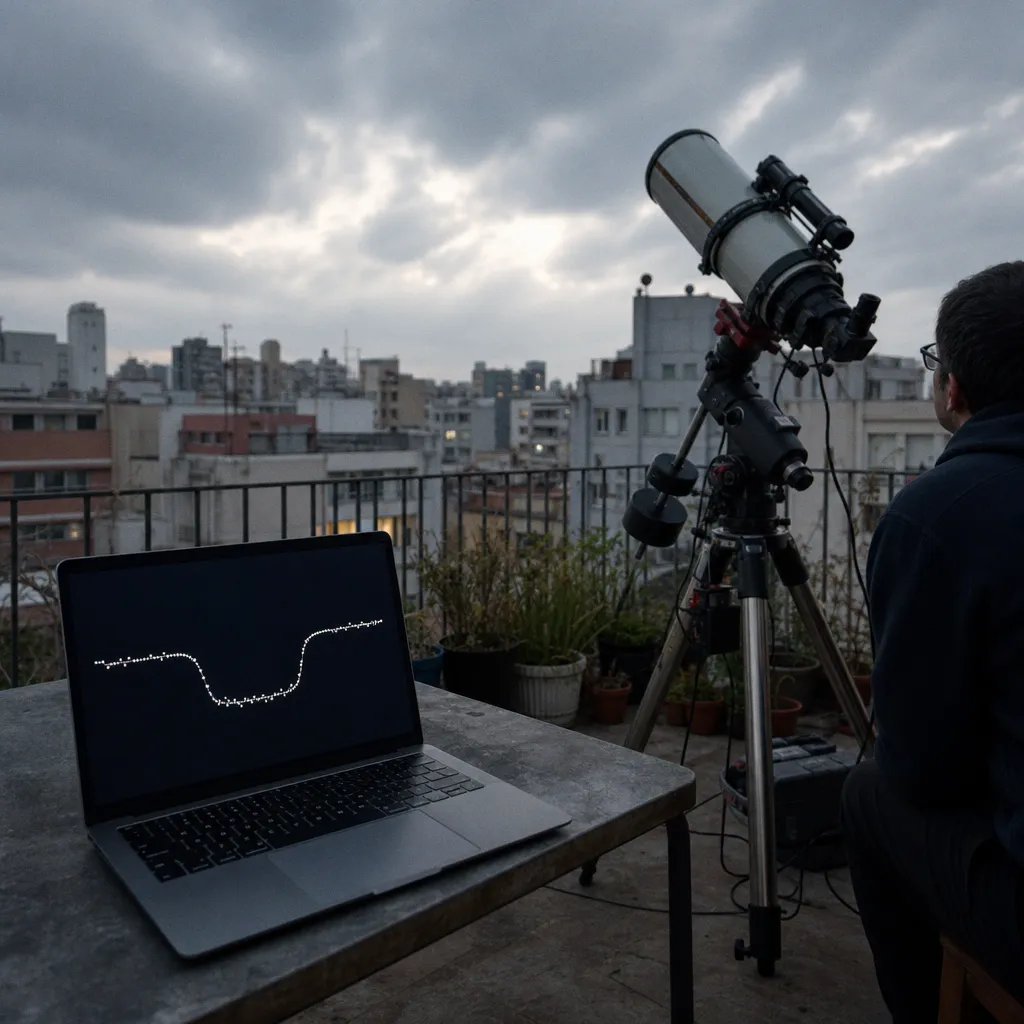
# The Democratization of Discovery: How to Join the NASA Citizen Science Project to Find New Worlds
The NASA Exoplanet Watch project represents the pinnacle of this collaborative spirit. By inviting the public to contribute to the analysis of photometric data, NASA is not just outsourcing labor—they are inviting you to participate in the "Golden Age of Astronomy." Whether you own a high-end telescope or simply a laptop with an internet connection, you can now play a pivotal role in refining the transit timings of planets orbiting other stars. This process is essential for the James Webb Space Telescope (JWST) and future missions, as it ensures we don't waste precious observing time looking at a star when its planet isn't actually transiting.
The Architecture of Participation: Why the Citizen Scientist is Essential
The sheer volume of data currently streaming back from missions like TESS (Transiting Exoplanet Survey Satellite) is staggering. We are identifying "candidates" at a rate that far outpaces the capacity of professional astronomers to verify them. This is where the concept of the citizen scientist becomes a logistical necessity. To understand how to join the NASA citizen science project to find new worlds, one must first understand the "transit method." When a planet passes between us and its host star, the star’s light dips by a tiny fraction. Measuring this dip—a light curve—requires patience and repetitive observation.
NASA needs "crowdsourced" observations to maintain an up-to-date database of these transits. Over time, the orbits of these distant planets can shift slightly due to the gravitational pull of other undiscovered planets in the same system (Transit Timing Variations). By monitoring these shifts, citizen scientists are often the first to flag the presence of additional planets that professional surveys might have missed.
Discovery is no longer a solitary act of genius, but a collective symphony of observation where every data point contributes to a grander truth.
Prerequisites for Your Home Observatory Setup
There is a common misconception that exoplanet hunting requires a Ph.D. and a telescope the size of a small car. In reality, the "Exoplanet Watch" project is designed with two distinct pathways for participation, making it accessible to a broad spectrum of enthusiasts.
| Requirement Level | Necessary Equipment | Primary Activity |
|---|---|---|
| Data Analyst | Laptop, Internet, Python (optional) | Analyzing existing data from NASA's archives using EXOTIC software. |
| Observer | 6-inch (or larger) telescope, CCD/CMOS camera, Tracking Mount | Capturing raw photometric data of known and candidate exoplanets. |
| Hybrid Researcher | Both of the above | Taking raw celestial images and processing them into validated light curves. |
If you are an observer, you don’t need the most expensive gear, but you do need precision. A tracking mount is non-negotiable, as the camera must stay locked on the target star for several hours to capture the full transit. For those who prefer the digital frontier, the "Data Analyst" path allows you to download raw data from the MicroObservatory—a network of automated telescopes—and process it using NASA-provided tools.
Technical Workflow: From Raw Photons to Validated Light Curves
Once you decide to join, the technical journey begins with a piece of software called EXOTIC (Exoplanet Imaging Training in Orbit). This is the heartbeat of the project. EXOTIC is a Python-based tool that automates the reduction of data, allowing you to turn a series of FITS (Flexible Image Transport System) files into a clean, readable light curve.
1. Target Selection: Use the Exoplanet Watch target list to find stars that are currently scheduled for observation. It is vital to choose a target that fits your "viewing window" and telescope's capabilities.
2. Calibration: If you are taking your own photos, you must take "Dark," "Flat," and "Bias" frames. These are essential to remove electronic noise and optical imperfections from your final data.
3. Photometry: This is the process of measuring the brightness of your target star relative to "comparison stars" in the same field of view. By comparing the target to stable neighbors, you can account for atmospheric fluctuations.
4. Modeling: The software fits a mathematical model to your data points. If you see a distinct "U-shaped" dip, you are looking at the shadow of a world.
For those looking to balance their cosmic explorations with more earthly pursuits, exploring modern lifestyle and practical life tips can provide the grounded perspective necessary to maintain a productive research schedule while staying connected to current trends.
The Art of Precision: Checklist for Validating Your Data
NASA does not expect perfection on your first night, but they do require scientific integrity. Before you submit your results to the American Association of Variable Star Observers (AAVSO) or the Exoplanet Watch portal, you must verify the quality of your submission. A "noisy" light curve is better than no light curve, but a "biased" one can be misleading.
* Check for Cloud Interference: A sudden drop in brightness across *all* stars in your field usually indicates a passing cloud, not an exoplanet.
* Air Mass Limits: Ensure your observation was taken when the star was at least 30 degrees above the horizon to minimize "atmospheric extinction."
* Time Synchronization: Your computer clock must be synced to an atomic clock (UTC). A discrepancy of even 30 seconds can render your transit timing data useless for orbital refinement.
* Signal-to-Noise Ratio (SNR): The "dip" must be significantly deeper than the standard deviation of your baseline data.
The beauty of science lies in its transparency; a well-documented failure is often more valuable to the archive than a lucky guess.
Overcoming the Learning Curve: Common Pitfalls
The most frequent hurdle for new participants is "Plate Solving." This is the process where the software identifies the stars in your image by comparing them to a known star catalog. If your image is out of focus or your field of view is too narrow, the software will fail.
Another common issue is "Saturation." If you choose a star that is too bright for your telescope/camera combination, the pixels will "overflow," losing all data regarding the star's actual brightness. It is often better to observe a slightly dimmer star with a longer exposure than a bright star that risks hitting the sensor's ceiling.
The Impact: Your Name in the Annals of Science
What makes this project unique among citizen science initiatives is the tangible reward. NASA’s Exoplanet Watch isn't just a "thank you for your service" program. If your data is used in a peer-reviewed scientific paper, you are often credited as a co-author. This isn't just positive news for your resume; it is a validation of your contribution to the human story.
We are currently tracking thousands of "TESS Objects of Interest" (TOIs). Many of these are "Hot Jupiters" or "Sub-Neptunes" that are relatively easy to detect. However, the Holy Grail remains the "Earth-sized" planet in the habitable zone of an M-dwarf star. These are harder to find and require the collective monitoring power of thousands of eyes across the globe. By joining this project, you are helping to narrow down which of these worlds deserve a closer look by the James Webb Space Telescope in the search for biosignatures—the chemical fingerprints of life.
Final Perspective: A Shared Cosmic Legacy
The act of looking up has always been a fundamental human instinct, but for the first time in history, we have the tools to look *into* the systems of other stars from our own backyards. When you verify how to join the NASA citizen science project to find new worlds, you aren't just engaging in a technical exercise; you are joining a global vanguard of explorers.
The data you upload tonight might be the final piece of the puzzle that confirms a habitable planet just 40 light-years away. In a world often divided by terrestrial concerns, the pursuit of exoplanetary science offers a rare, unifying perspective. We are a single species, on a single planet, finally reaching out to see who else might be sharing this vast, luminous theater of the universe. The tools are ready, the stars are waiting, and the next discovery could very well be yours.